Evidence-based treatments to slow the progression of nearsightedness in children and teens — protecting their vision now and reducing risk later in life.
Myopia (or nearsightedness) involves blurry distance vision, while near vision typically remains clear. Childhood onset myopia is most commonly caused by the eyes growing too quickly and elongating; the eyes may continue to grow at a rate beyond age-expected norms, leading to an increasingly high prescription.
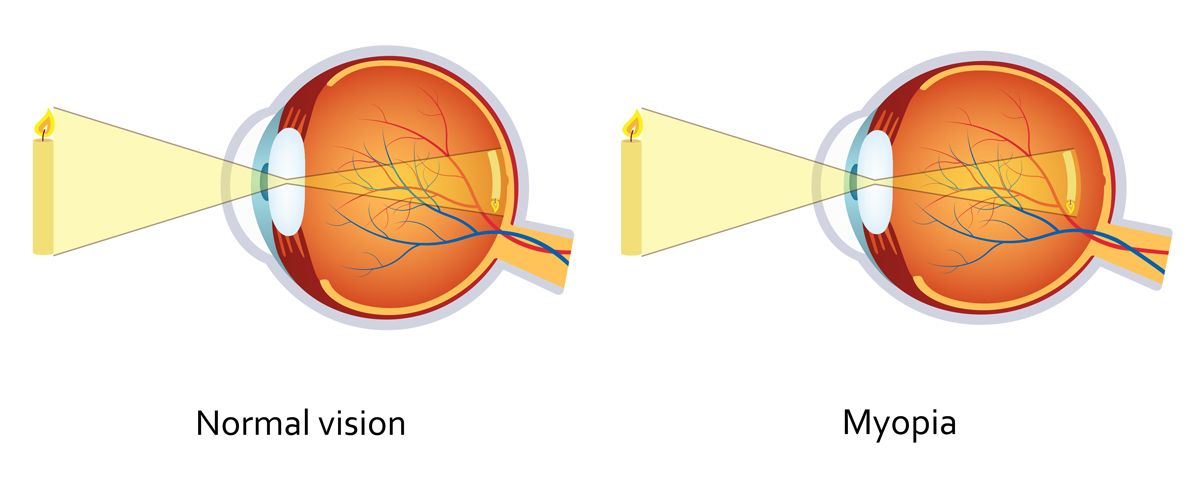
In a myopic eye, light does not land on the retina, leading to blurry distance vision
As of 2024, 30% of the world's population is myopic. This is expected to reach 40% across the globe by 2050. Myopia is the leading cause of visual impairment in children. Once your eyes develop myopia, they are more likely to become increasingly myopic. High myopia and an elongated eye are associated with a higher risk of vision impairment because of retinal detachment, glaucoma, and/or cataracts later in life. Additionally, higher amounts of myopia may preclude one from future refractive surgery (e.g. LASIK) candidacy, or result in less successful outcomes.
High myopia is characterized by a refractive error of -6.00 diopters or higher, and/or an axial length measurement of 26.00mm or longer. At Spadina Optometry we believe that every diopter/mm matters and that both of these measurements are important to monitor over time.
Assess your child's risk factors here: Myopia Risk Assessment Quiz
While single vision glasses and contacts can correct myopia to allow for clear vision, they cannot slow or reverse myopia. Myopia control involves the use of:
Miyosmart, Stellest, MiSight — lenses designed to slow eye elongation.
MiSight, Abiliti, Biofinity multifocal — daily wear options for myopia control.
Overnight lenses that reshape the cornea for clear daytime vision without glasses or contacts.
Low-dose atropine drops — used to slow progression alongside other interventions.
These interventions have been shown to slow myopia progression by an average of ~60%, and slow eye elongation by ~59%. The goal of myopia control is to slow this progression in order to mitigate the risk of diseases associated with an elongated, highly myopic eye, and to allow for a better lifestyle.
By measuring the axial length of your child's eyes, we can i) plot the length of their eyes on a growth curve, ii) track the rate of change of growth over time, iii) prognosticate the risk of myopia, and high myopia, development, and iv) assess the success of any myopia control intervention prescribed.
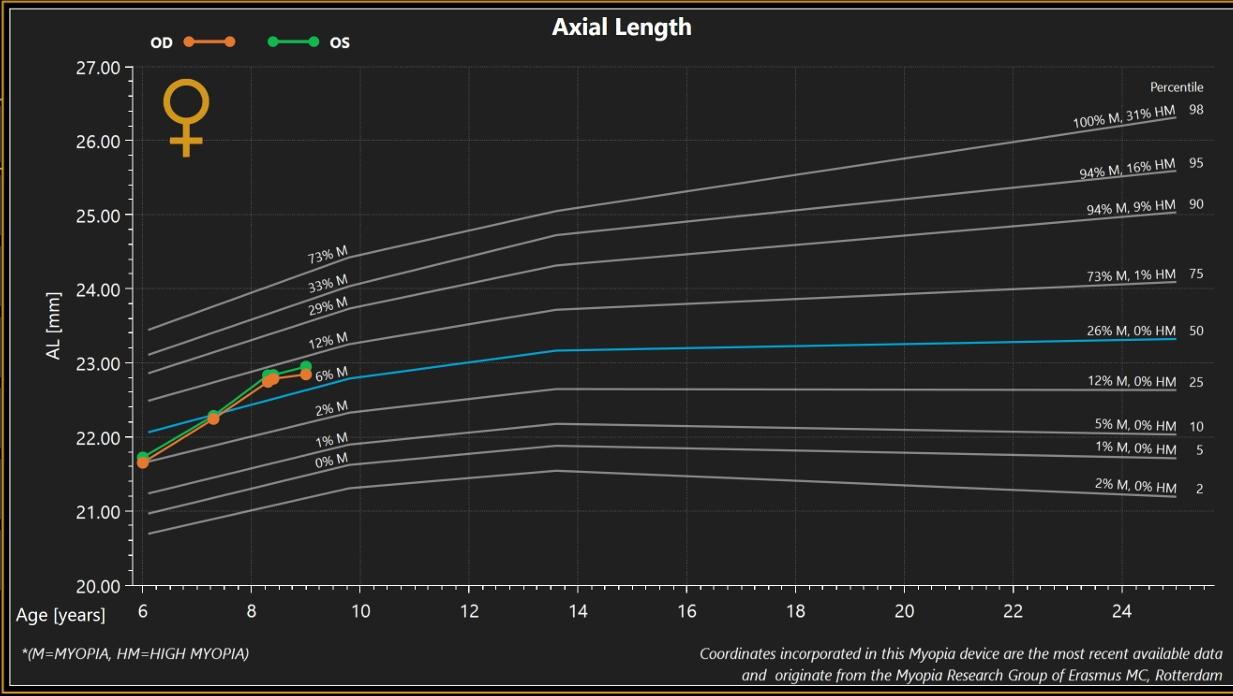
In the axial length growth chart above, though the patient was farsighted (hyperopia) at 6 and 7 years of age, her eye growth rate was rapidly increasing towards myopia at a rate much quicker than most girls her age. By initiating myopia control (involving contact lenses) at age 8, her growth rate was successfully reduced.
At Spadina Optometry, the comprehensive children's exam will include assessment of myopia risk factors including eye length, and together we will create a tailored myopia control program including any combination of the above treatment options.
OHIP + $98
Includes all follow-up appointments and ongoing measurements for up to 12 months.
See eye exam prices and insurance and pricing FAQ for details.
Your child's future vision is worth protecting. Our team is here to help you understand your options and guide you through every step of your child's myopia care journey.